A short drive across a New England state line can mean a very different minimum wage. For workers comparing jobs, employers preparing payroll, and households deciding where to live, the hourly number matters. So does the rule that determines what happens next.
The six states currently follow different paths. Some have automatic annual adjustments, Rhode Island has another legislated increase ahead, and Massachusetts and New Hampshire continue at their existing general rates. Here is the position as of October 13, 2026.
The current rates
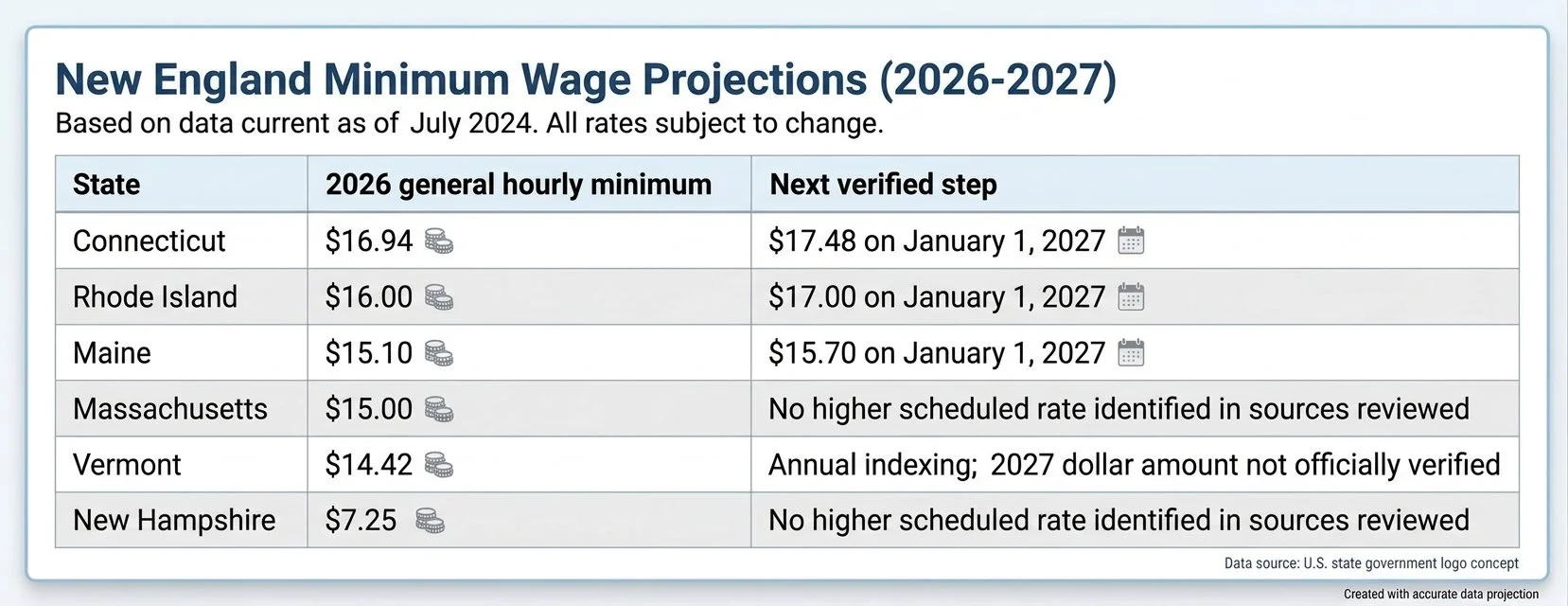
The general statewide minimum wages are listed below. These are hourly rates for covered workers, before taxes. They are not average pay, take-home pay, or a promise that a particular job falls under the general rule. The U.S. Department of Labor’s current table provides a regional cross-check.
Three confirmed increases for January 2027
Connecticut has confirmed an increase to $17.48 on January 1, 2027, a rise of 54 cents. Its annual adjustment uses the Employment Cost Index, which tracks compensation costs. That is a different measure from consumer-price inflation. The state’s announcement attributes the next adjustment to a 3.2% index increase over the year ending June 2026. Connecticut announcement
Rhode Island’s next step is also settled: $17 on January 1, 2027, following $16 in 2026. Both amounts come from legislation signed in August 2025. The additional dollar is therefore an enacted change employers can budget for, rather than an estimate of what lawmakers might approve. Rhode Island legislation announcement
Maine has announced $15.70 for January 1, 2027, up 60 cents. Its annual adjustment follows the Northeast Consumer Price Index for Urban Wage Earners and Clerical Workers, known as CPI-W. The announced rate is the figure to use for planning; extrapolating the headline inflation percentage can produce a different answer because statutory calculation rules matter. Maine announcement

Vermont’s formula, and the two unchanged floors
Vermont’s 2026 rate is $14.42. Its law calls for January adjustments based on the smaller of 5% or the specified CPI-U increase, with rounding rules and no decrease. An indexing formula establishes how the next rate is calculated; it does not make every published forecast official. A confirmed 2027 dollar amount was not located in the state sources reviewed for this article. Vermont current rate; Vermont statute
Massachusetts continues to list a $15 general minimum, effective since January 2023. New Hampshire remains at $7.25 under its minimum-wage framework. The official sources reviewed show no higher scheduled general rate for either state. Proposed legislation should be tracked separately from laws already in force. Massachusetts minimum-wage program; New Hampshire statute
Check which rule applies to the job
The general rate is only the starting point. Tipped work can have a lower required employer cash payment, subject to conditions and an obligation to make up a shortfall. For example, Rhode Island lists a $3.89 tipped cash wage while requiring combined wages and tips to reach the applicable general minimum. Certain student and youth arrangements also have exceptions. Rhode Island labor guidance
Local rules deserve attention, too. Maine identifies municipalities with their own minimum-wage ordinances, including Portland and Rockland. Anyone working there should check the applicable local requirement before relying on the statewide figure. Employers with unusual job classifications or workers covered by special rules should consult the relevant labor department. Maine wage guidance
What the numbers mean for a housing budget
An hourly raise translates into a household gain only after considering paid hours, taxes, benefits, and other changes. As a simple illustration, an extra $1 per hour at 40 paid hours a week for 52 weeks produces $2,080 more in annual gross earnings, or about $173 a month. This assumes steady hours and does not estimate take-home pay.
For someone weighing a move, compare the actual job offer with the full cost of living: rent, utilities, transportation, childcare, and the reliability of work hours. A higher wage floor does not establish how much an individual household can comfortably spend on housing.
Before setting a 2027 budget, separate confirmed increases from forecasts, check the rules where the work is performed, and use reliable household income. Those steps turn a regional wage comparison into a more useful personal decision.
Information checked October 13, 2026. This article provides general information, not individualized legal, payroll, or financial advice. Verify current requirements with the relevant agencies before acting.