
When you need time away for a health or family situation, paperwork can feel like one more thing to manage. Knowing what to ask, what to submit and what to keep can make the process easier to follow.
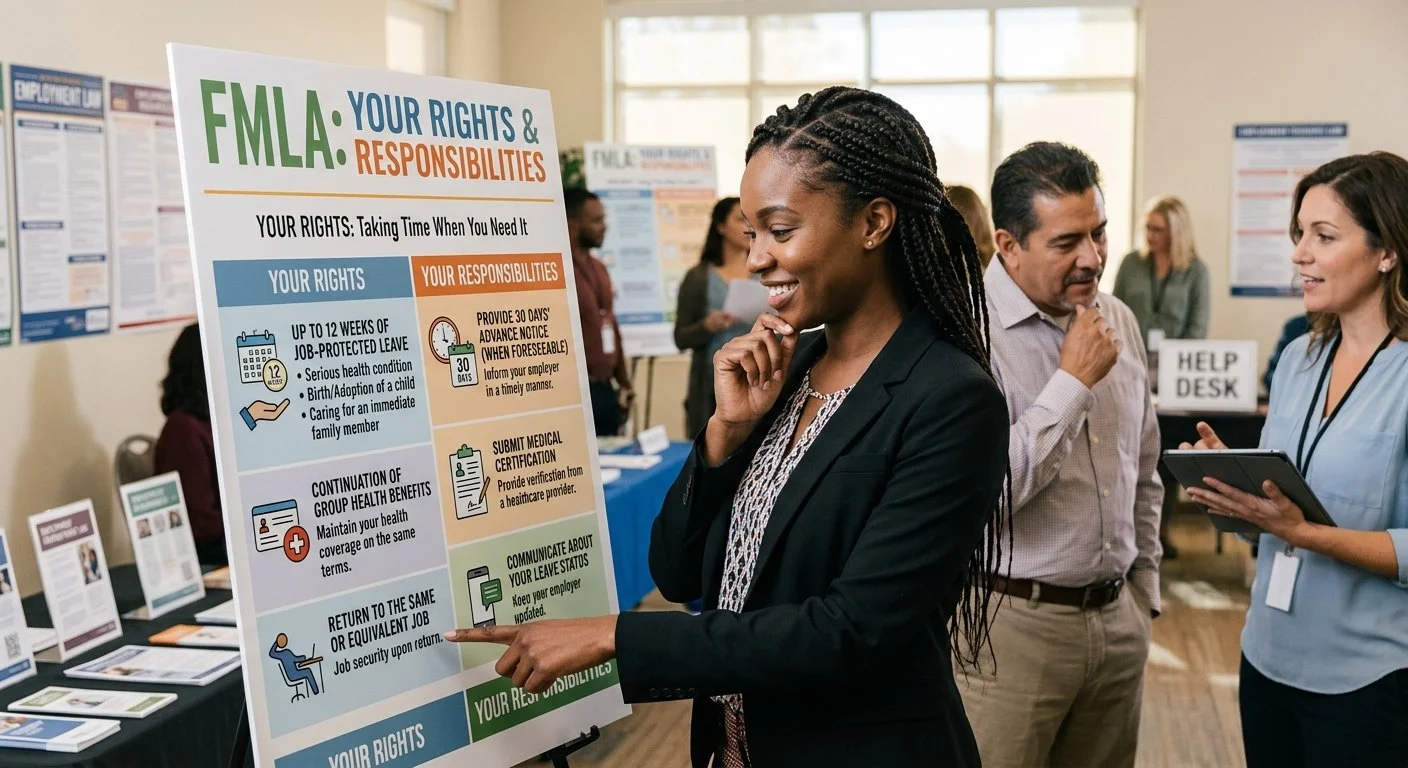
Federal FMLA creates important protections, but employees also have responsibilities. Use the steps below to prepare for a leave request and keep it on track. If you work in New England, check your state programs too: they may cover a situation that federal FMLA does not.
Start by checking eligibility
Most employees must have worked for a covered employer for at least 12 months, completed 1,250 hours of work in the preceding 12 months, and meet the 50-employees-within-75-miles worksite requirement. Ordinary paid vacation and sick leave do not count as hours actually worked. Special rules apply to some workers, including airline flight crews. Ask your leave administrator to explain the eligibility calculation if you are unsure. DOL eligibility FAQs
Federal FMLA generally allows up to 12 workweeks for qualifying reasons in the employer's applicable 12-month leave year. Ask which method your employer uses to calculate that year and how much leave you have available. A benefit year does not always follow January through December. DOL employee guidance
Tell your employer promptly
Give at least 30 days' notice when the need is foreseeable and that much notice is practicable. When it is not, notify your employer as soon as practicable. Follow the usual call-in or leave-request procedures unless unusual circumstances prevent it.
You do not have to say FMLA when first requesting leave, but you must give enough information for your employer to recognize a potentially qualifying reason. Simply saying you are sick may not be enough. Explain the need for time away and its expected timing without volunteering your complete medical history. DOL employee notice requirements
After the employer learns of a potentially qualifying need, it generally must provide an eligibility notice within five business days. If you are eligible, you should also receive written rights and responsibilities. A separate written designation notice explains whether the absence counts as FMLA leave once the employer has sufficient information. DOL employer notice requirements

Handle certification and privacy carefully
Your employer may request medical certification for your own or a qualifying family member's serious health condition. You generally have at least 15 calendar days to provide it. If diligent, good-faith efforts are not enough to meet the deadline, tell the employer promptly and explain the delay. Incomplete or insufficient paperwork generally comes with a written explanation and at least seven calendar days to correct it.
A diagnosis is not required in the certification, although enough medical information must establish the qualifying need. Your direct supervisor may not contact your healthcare provider to clarify the certification. Keep copies of what you submit and the date you submit it. DOL medical certification guidance
Employers must keep FMLA medical records confidential and separate from ordinary personnel records. Managers can receive information needed about an absence or work restrictions; that does not make your medical history general workplace information. DOL confidentiality guidance
Confirm how leave and pay will work
Federal FMLA is generally unpaid. Employer-paid leave or state benefits may provide income while federal protection applies. Ask separately about the approved absence, wage replacement, health insurance contributions and whether accrued paid time can or must be used.
Where state paid benefits cover an FMLA-qualifying absence, federal FMLA generally runs at the same time. The rules for supplementing state payments with employer PTO are more specific, so avoid assuming you must exhaust every paid day first. DOL paid-leave coordination guidance
For example, Connecticut requires a separate application for CT Paid Leave benefits and a request to the employer for job-protected leave. One approval does not automatically establish the other. How CT Paid Leave works

Stay in touch and prepare to return
Keep following applicable reporting procedures during intermittent leave and communicate material changes to your expected return. Medically necessary intermittent or reduced-schedule leave can qualify; intermittent bonding leave generally requires employer agreement. Federal leave scheduling rules
Check the designation notice for any properly required fitness-for-duty certification before your return. Give yourself time to arrange it rather than discovering the requirement on your first morning back. DOL return-to-work certification guidance
FMLA generally protects reinstatement to the same or an equivalent position and continued group health coverage on the same terms, including your normal share of premiums. Employers may not count protected leave against you as an attendance violation or use it as a negative factor in employment decisions. If something seems wrong, keep relevant records and contact the U.S. Department of Labor's Wage and Hour Division. DOL employee protections
Before leave begins, try to leave the conversation with four things in writing: your leave status, your paperwork deadlines, your pay and benefit arrangements, and your return-to-work requirements. Those details give you a practical reference when your attention needs to be elsewhere.
General information, verified October 13, 2026. Individual circumstances and state protections vary. This article is not legal advice.
